 Care
Care
Why Does My Puppy Eat Feces?
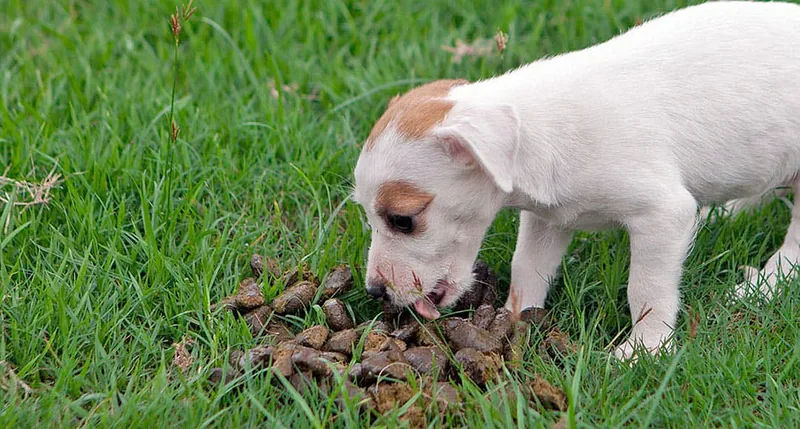
Nobody likes seeing their puppy start eating other animals' feces, or even its own, since besides being disgusting, it can be very harmful to its health.
Puppies are the most prone to this bad habit, since due to curiosity or a nutrient deficiency, they can end up trying this strange delicacy, and worse, ending up liking it. Let's look at how to respond.
My Puppy Eats Its Own Feces — Why?
This usually happens in puppies adjusting to their new home. Suddenly, without warning, on the day you least expect it, you see it eating its own stool. Sometimes the solution is simple: it sees you picking up its stool to keep the house clean, or sees you picking up its feces on the street, and it may think pooping is wrong.
It's important (for this and other behaviors throughout its life) to act right at the moment it happens. So we need to act when we see it eating its stool, never after, but at that very moment. Don't hit it or yell at it (never be cruel to your companions, it's not fair). Simply scold it or say "No" firmly and in a loud tone of voice.
Try, as much as possible, not to let it see you picking up its feces, and this way, scolding it when it eats its stool, it will understand within a short time that it shouldn't eat it and will stop. It will be important to use positive reinforcement and reward it when it does its business outside the house.
One trick involves giving our dog something that makes its stool smell different or taste unpleasant to it. This has sometimes been achieved by adding pieces of pineapple to our dog's food for several days.
Remember that hitting a dog is a big mistake — it's a technique that teaches nothing, it only encourages violence and fear. To correct our dogs' bad behaviors, such as eating their own stool, scolding them is more than enough.
My Puppy Eats Other Dogs' Feces — Why?
One of the reasons dogs eat feces is a nutrient deficiency, trying, by physiology and instinct, to make up for this shortage this way. Low-quality kibble can cause serious nutritional deficiencies in our dog, which it tries to make up for by eating its own stool or that of other animals.
To solve this problem, we simply need to feed our dog quality kibble, and within a few weeks these deficiencies will disappear. However, stabilizing vitamin and mineral levels doesn't happen overnight.
It's very important, especially in the first year of life, to give our pet the best quality kibble, since much of its development depends on it. It's also possible to give a complete vitamin complex. Giving probiotics will also be a good idea for our puppy's intestinal microbiota (flora) to develop properly.
It's also possible they eat other dogs' feces simply because they're constantly hungry, and since these have formed from a different kibble, they smell different, and the way to try them is to eat them.
My Puppy Eats Other Animals' Feces and Human Feces Too — Why?
This isn't a problem, it's instinct. Our dogs have an extremely developed sense of smell, they're able to smell the compounds in a stool rather than just the bad smell it gives off. Most dogs love eating human, cat, goat, and horse feces…. The reason is very simple: they like how it smells and their curiosity is piqued.
Normally this isn't due to a nutritional problem — it's simply due to their animal survival instinct. Obviously, if we scold them when we see them doing it, over time they'll learn not to. But they'll always be attracted to the smell of this type of feces, so it will be very difficult, even after years, for them to drop this instinct. What we need to do is stay alert wherever we go.
A good trick is to always carry a dog treat, and when you see it approaching some feces to eat it, call it over with the treat in hand and it will usually forget about it. If we distract it with any game, treat, or similar, its mind will quickly forget its intention to eat the animal's feces and continue with its walk.
Remember to always be patient with your companion and teach it what's right. Never physically punish it, since that's the wrong path. Encouraging positive reinforcement for good behaviors and giving it all your affection is the same thing it does for you.
IMPORTANT: This article is for informational purposes only and does not constitute veterinary, nutritional or behavioural advice. Every dog is different, and only your trusted vet can advise you on its specific needs.