 Care
Care
Can All Dogs Swim?
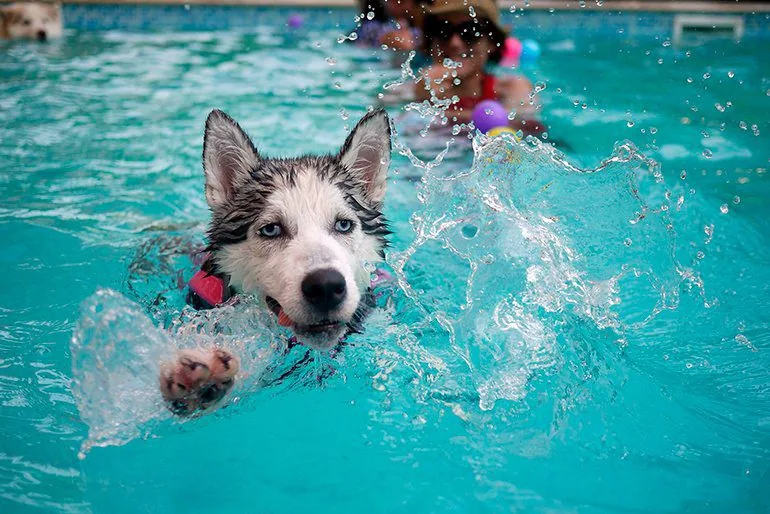
Physical activity is essential for keeping your dog happy and balanced. And, among the options available to exercise your companion, swimming is one of the most complete. But... can all dogs swim?
The truth is, while every dog has a survival instinct that'll make them paddle their legs when they feel like they're sinking, not every breed has an anatomy built for it.
What Sets Apart Breeds That Swim More Easily From Those That Don't?
Every breed has particular characteristics tied to its genetic heritage and the purpose it was bred for. Some varieties are natural swimmers, while others will struggle to keep their head above water. Natural selection has led dogs living in aquatic environments to evolve for greater ease moving through water. Here are some characteristics of swimming breeds:
- Curly, double coat: many water dog varieties have a double coat that repels water, and a coarse, curly fur that keeps their weight from increasing when wet.
- Webbed feet: some aquatic breeds have also developed feet with webbing between their toes, similar to ducks'. This gives them more power to move through water easily.
- Great stamina: these breeds have great vitality and endurance. These qualities are essential to counter the significant energy expenditure long swim sessions require.
Specifically, Which Breeds Have a Swimming Instinct?
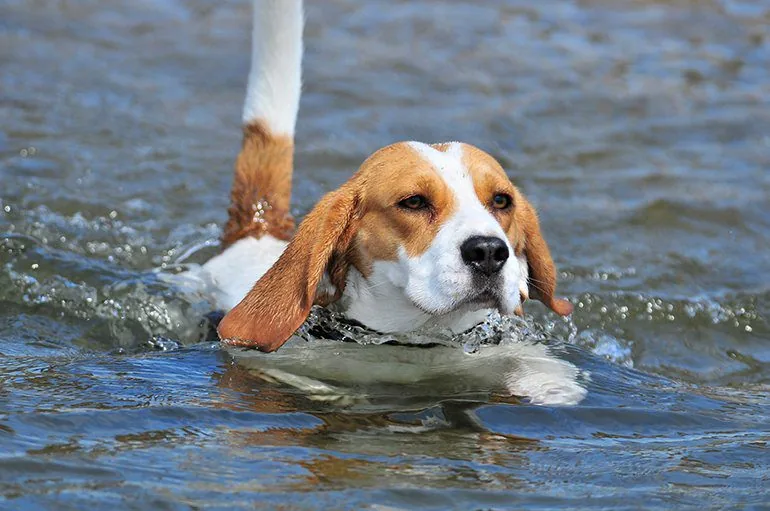
There are two major groups of dogs that love water. On one hand, there are waterfowl retrievers; on the other, water dogs. The former have traditionally been used to retrieve game, while the latter have worked as working dogs helping sailors and fishermen.
These groups aren't closed categories, and there are countless examples of breeds with water-dog characteristics, like the Poodle.
Retriever Dogs
- Golden Retriever: originally from Scotland, it was bred to combine a dog gifted for hunting with a gentle temperament toward people. Its character makes it perfect for families with children.
- Labrador Retriever: comes from Canada. Thanks to its great character, it's one of the most popular dogs worldwide, with an active, playful temperament.
- Nova Scotia Duck Tolling Retriever: known for its distinctive hunting technique. It moves intensely, playing near the water to spark curiosity in birds that come closer, with one goal: to bring them within range.
- Chesapeake Bay Retriever: originated in Chesapeake Bay. It's said to descend from two Newfoundland dogs that survived a shipwreck.
Water Dogs
- Spanish Water Dog: originally from the Andalusian coast. They're very intelligent and easy to train. Because of these qualities, they're highly valued by security forces.
- Portuguese Water Dog: accompanied Portuguese sailors around the world. They're brave and don't hesitate to dive into any kind of water.
- Irish Water Spaniel: a dog used to icy waters, able to withstand below-freezing temperatures.
- Barbet: of French origin, recognizable by its mustache and long beard. Very energetic, they were used as working dogs, but also as retrievers.
- Poodle: also of French origin, its original job was retrieving ducks shot down by hunters, hence its name: Canard Chien ("Duck Dog" in French). It's one of the smartest breeds in the world, with great learning ability.
- Newfoundland: somewhere between a retriever and a working dog, these sturdy dogs are legendary for their sea rescue feats along North America's Atlantic coasts.
There are many other breeds with swimming ability, like German or Belgian Shepherds, Spaniel breeds, Setters, or Dalmatians, which will also enjoy swimming or even diving.
And Which Dogs Aren't Suited for Swimming?
Physical characteristics also play a big role in breeds unable to stay afloat. Sturdy-built, short-legged varieties have the hardest time here, since their weight and underdeveloped limbs are inefficient.
Also, brachycephalic dogs (with flat faces and short noses) need to stay in a completely vertical position to avoid swallowing water, which prevents them from floating.
Other dogs with very short, thick necks will struggle to keep their head above water, while those with very thick, abundant coats can't move well in water.
Lastly, breeds with bodies excessively long relative to their height also aren't good swimmers. For example:
- Bulldog
- French Bulldog
- Bull Terrier
- Boxer
- Pug
- Shih Tzu
- Pekingese
- Basset Hound
- Dachshund
If you have one of these breeds, try to closely supervise it if there's a pool nearby, since they're at risk of drowning easily. There's no reason these dogs can't enjoy water, as long as it's in a safe setting that doesn't fully submerge them.
IMPORTANT: This article is for informational purposes only and does not constitute veterinary, nutritional or behavioural advice. Every dog is different, and only your trusted vet can advise you on its specific needs.