 Care
Care
Dog Coat Types and How to Care for Them
Every dog is different from the rest, even within the same breed — each one has a unique personality and physical traits all their own, among which their coat is usually one of the most noticeable.
Since there are several types of coat, there are also different ways to care for them, in order to maintain good coat health, good shine, and avoid shedding or parasite problems. At SoyUnPerro we're going to explain how you should care for each one.
Short-haired dogs
Short hair is the most common coat type in dogs, being the most widespread worldwide regardless of breed. Luckily, it's also the easiest to care for if you have a dog with a short coat.
Short-haired dogs have plenty of advantages over the rest — they don't need to be bathed as often, and it's also easier to brush them and keep them free of parasites.
A dog can be said to have short hair when the length of the coat doesn't exceed five centimeters. Some short-haired breeds include the Doberman, the Pitbull, or the Chihuahua, among many others.
Here are some tips for keeping our dog's coat clean and well cared for:
- A bath with special dog shampoo once every four to six weeks.
- Brush our dog a couple of times a week with a brush designed specifically for short hair.
- Check for parasites once a week.
Not all dog brushes are the same — each one is designed for a specific coat type. You can learn more here: Types of dog brushes.
Long-haired dogs
When our dog's coat is longer than six centimeters, it's considered long hair. This coat type is more complex to care for, since it requires more attention and work, but when well maintained it looks stunning.
The most common problems in long-haired dogs are tangles, plant debris getting caught in the fur, and finding parasites. That's why we need to be patient and treat it as something we're simply going to have to do regularly, no way around it.
Some of the best-known long-haired breeds are the Pekingese, the Puli, or the Setter, among many others. Many of these dogs need to visit the groomer several times a year, since their coat keeps growing constantly.
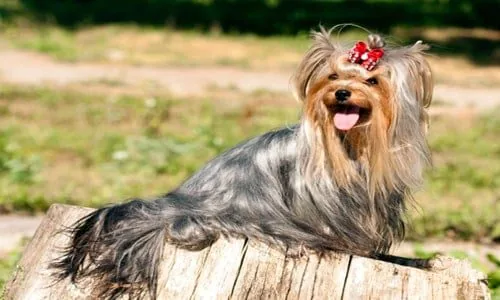
To keep our dog's long coat healthy and clean, we should follow these tips:
- Bathe our dog with a special shampoo and conditioner for dogs every four weeks.
- Brush our dog five to seven times a week, practically every day.
- Use spot-on treatments and special collars against parasites, since manual checks will be difficult due to the sheer volume of fur.
One of the most important things to keep in mind is knowing how to bathe our dog thoroughly, taking the time to do it properly. You can find more information here: How and when to bathe a dog.
Curly-haired dogs
Curly-haired dogs are also considered long-haired dogs, but the nature of their coat makes it even more complex to keep it shiny and parasite-free, so we'll need to put in extra effort.
Some of the best-known curly-haired breeds include the Spanish Water Dog, the Bichon Frise, and even some Cocker Spaniels. Some of these breeds handle haircuts well, which helps a lot in keeping their skin and coat healthy and clean.
The main care needs for a curly-haired dog are:
- Bathe our dog every three to four weeks, sooner if they get dirty playing.
- Brush them daily with a brush designed specifically for long, curly coats.
- Use veterinary products to prevent parasites such as fleas or ticks.
We shouldn't make the mistake of thinking this coat type is the same as long hair, since being curly makes it even more complex to clean and comb through. We need to be patient and take the chance to bond with our dog while caring for their coat every day.
Wire-haired dogs: what care do they need?
Wire-haired dogs are those whose coat is naturally very coarse due to their own genetics, and it can be short (under five centimeters) or medium length (between five and ten centimeters).
Some breeds, such as the Wirehaired Pointing Griffon, have a genuinely tough, unruly coat, something many owners try to change through special diets and grooming, but they'll never succeed, since that's simply their natural coat.
Having a wiry coat isn't a problem for a dog — quite the opposite, in fact, since it offers them more protection against scrapes. They simply need some simple maintenance care:
- A bath every four to six weeks to remove dirt.
- Brush them with a comb designed for coarse coats, a couple of times a week.
- Check for parasites once a week.
How can I make my dog's coat shiny?
Several important factors come into play for a dog to have a really shiny coat, the most obvious being the dog's own genetics. We should accept that some breeds naturally have a very glossy coat, while others don't shine as much.
The second factor is diet — a well-fed dog will always have a nicer coat than a poorly-fed one, because a lack of nutrients and Omega fats also shows up in the coat.
There are certain foods that help a dog's coat gain more shine within a few weeks, fish oil being one of the standouts. Don't miss: Fish oil for dogs.
And finally, something that depends directly on us: bathing our dog when they need it and using a high-quality shampoo made specifically for dogs. Dogs have a different skin pH than humans, which is why they need a special shampoo.
IMPORTANT: This article is for informational purposes only and does not constitute veterinary, nutritional or behavioural advice. Every dog is different, and only your trusted vet can advise you on its specific needs.