 Training
How to Stop a Dog Eating Faeces
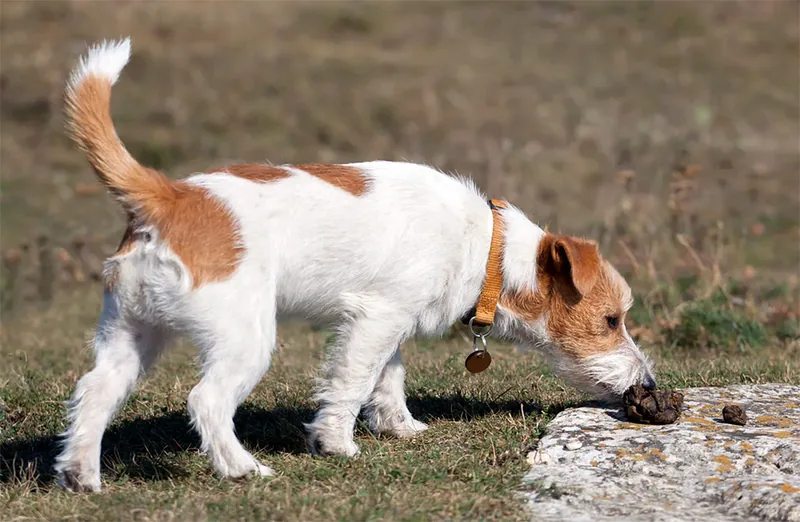
Although it may seem like a strange habit, the truth is coprophagia (eating faeces) is far more widespread in dogs than it might initially seem. There are several ways to stop your dog eating faeces, but they'd be useless if we don't locate the source of the problem, to provide a solution.
We're going to show you the method we use to stop a dog eating faeces, whether their own or from other dogs and/or animals. Even so, what matters most of all is knowing the cause behind it, so let's quickly go through the possible reasons and, of course, their respective solutions.
Dogs Who Eat Faeces From Nutrient Deficiency
A lack of nutrients or enzymes is the most common reason dogs eat faeces, trying, through physiology and their own instinct, to make up for this shortfall. With that said, the reasons a dog could have nutritional or enzyme deficiencies are several:
- Feeding our dog low-quality kibble, or otherwise unbalanced food.
- Liver or digestive conditions, such as inflammatory bowel disease (IBD), among others.
- Intestinal parasites.
Low-Quality Food
Low-quality kibble can cause our dog serious nutritional deficiencies, which they try to make up for by eating their own faeces or those of other animals. To fix this problem we simply need to feed our dog quality kibble, and within a few weeks these deficiencies will have disappeared.
Generally, low-quality kibble tends to be what's found in supermarkets, since these accept or create multiple brands with barely any oversight and tend to be very high in grains. So, we recommend asking your trusted vet for nutrition advice — they'll give you the names of higher-quality brands.
This especially matters during our animal's first year, since they'll need a balanced, complete diet to shape their development. Conversely, if we want to give our pet a diet such as the BARF diet, we need to make sure it has the right levels of protein, carbohydrates, vitamins, minerals and so on.
We also need to watch that our dog is eating the amount of food that's right for them, since even if we use quality kibble, if the amount isn't right, we'll cause deficiencies through either a shortfall or an excess.
Eating Faeces From Illness
If it's an illness, it's very likely digestive in nature or affecting organs in this system, since it's responsible for controlling and absorbing nutrients into the blood.
We need to locate it so we can provide the right medication and stop our dog continuing to eat faeces. Some illnesses, such as exocrine pancreatic insufficiency (inflammation of the pancreas), can cause our dog to lack digestive enzymes or not release them properly (lipase, amylase…), something they try to make up for through their own faeces or those of other dogs.
So, if we get low-quality kibble with excess grains, since they can't release such a large amount of amylase (which breaks down carbohydrates), our animal will try to get it from faeces.
Other illnesses, such as Inflammatory Bowel Disease (IBD), cause our dog to be unable to absorb all the nutrients from the food they're digesting, since they usually have damaged or inflamed microvilli (photo below). This causes deficiencies our dog tries to cover by eating other animals' faeces or their own.
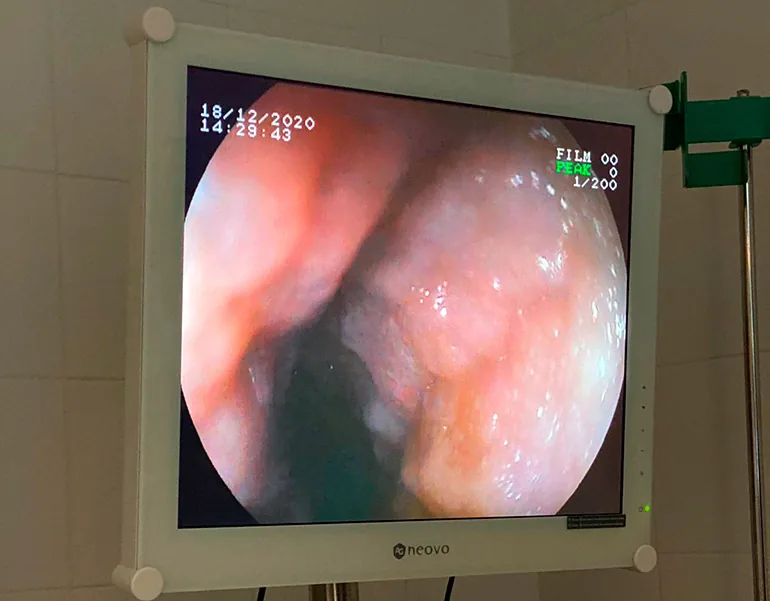 Small intestine with IBD seen through endoscopy and confirmed in the lab through biopsy.
Only a vet can determine whether our dog suffers from an illness that makes them eat faeces instinctively. Some tests need to be run to confirm these diagnoses.
Eating Poo Because of Intestinal Parasites
It's also possible this isn't a systemic illness but intestinal parasites, which also prevent nutrient absorption, leaving our dog with significant deficiencies. Some intestinal parasites can be simply eliminated using tablets given every two to three months (depending on the composition) with food.
Even so, there are also some intestinal parasites, such as Giardia spp, able to survive these tablets, since they're a different type of parasite. This type of parasite needs eliminating with a long treatment using an antiparasitic and an antibiotic prescribed by the vet. To determine what type of parasite it is, there are several diagnostic tests, but sometimes a stool test is enough (very affordable at vet clinics).
Eating Faeces From Hunger, Anxiety or Stress
Another reason a dog eats faeces is simply hunger — plenty of people, whether because of scheduling needs or being poorly informed, feed their dogs incorrectly.
A dog under three months old should eat between four and six times a day — this doesn't mean we should overfeed them, but rather split their daily food amount into four to six meals.
A dog aged three to twelve months should eat between three and four times a day. From a year old, we should always keep to 3 meals a day, especially in large breeds, since kibble left available or a single daily meal could cause conditions such as gastric dilatation-volvulus in these dogs.
By splitting their food into several meals throughout the day, we'll prevent them going excessively hungry, and this way their urge to eat faeces will also decrease.
Anxiety and Stress Cause Bad Behaviour
When it's about loneliness, anxiety or stress, we need to change our approach to the problem. Before leaving our dog alone at home, we should go for a walk and exercise with them, this way ensuring they're more tired, calm, and that we've eased the stress they might have had otherwise.
It's also a good idea to keep them entertained — we can use some toys that let us put food inside, so our dog stays entertained trying to get the food out. This type of toy is known as Kong toys. There's a wide range of toys we can use to provide environmental enrichment and keep them physically and mentally entertained, this way lowering the odds of coprophagia.
Really, these are simple tricks to prevent the separation anxiety our dogs suffer when left alone at home.
Dogs Who Eat Faeces From Imitation or Fear of Punishment
Everyone knows dogs are highly intelligent, and because of this, from puppyhood they start imitating us in plenty of things, far more than we imagine. One of these is watching us pick up their faeces — they can pick up on the fact this isn't something we enjoy, and as a result, try to pick it up themselves (and their only way of doing so is eating it).
On another note, there are people who, when they get home and see their dog has relieved themselves inside, get very angry and even shout at or punish their dog. This is something you should never do, since some dogs are capable of eating their own faeces simply out of fear of punishment or making us angry.
If we get home and our dog has relieved themselves inside, it's possibly because they couldn't hold it any longer, or because we haven't properly taught them to relieve themselves outside the house.
We should never scold them or even glare at them — we should simply assess whether they couldn't hold it, whether we've left too much time between walks for them to relieve themselves outside, or whether we simply haven't taught them properly.
Dogs Who Eat Faeces From Hygiene or Lack of Space
Strange as it may seem to us at times, our dogs are actually very clean animals who try not to urinate or defecate near where they sleep. Sometimes, when we have a puppy and can't take them out on the street since they don't yet have all their mandatory vaccines, we have the bad habit of setting up a spot for them in the kitchen, on the terrace or in the living room.
In these cases the dog has no option to relieve themselves outside the house, so when they do it inside, they sometimes eat it simply for hygiene, so as not to have it near their bed or play area.
The same happens with adult dogs who spend a lot of time cooped up at home or on a terrace — there are plenty of cases where they end up eating their own faeces to maintain some degree of hygiene.
Another example, a normal one in this case, can be female dogs who've had puppies eating their faeces to keep the "nest" or the calm spot where they are to nurse clean.
Fixing this kind of behaviour is as simple as stopping our dog or puppy relieving themselves near where they sleep or play, setting up a routine of park outings so they learn to relieve themselves outside the house.
Is It Dangerous for My Dog's Health if They Eat Faeces?
Although it's fairly common for this to happen and sometimes nothing has come of it, the truth is it can indeed be dangerous, for the various reasons explained above.
In theory, when our dog eats their own faeces, they're reintroducing into their body the waste their digestive system chose not to absorb. It's a way of poisoning themselves with toxins from their own body, so it's a form of feeding that can lead to other illnesses.
Because of this, it's also dangerous for them to eat other dogs' or animals' faeces. Most intestinal parasites, such as Giardia spp, are mainly transmitted through eating contaminated faeces. If our dog eats faeces from a dog carrying parasites, our dog will get infected. It's even more dangerous in the case of parvovirus, which can be caught the same way and is often fatal for our puppy.
How to Stop My Dog Eating Their Own Faeces or Other Dogs'/Animals' Faeces?
Obviously, depending on the source of the dog's problem, we can act more or less appropriately. If our dog has nutritional deficiencies, as we've explained above, it'll be enough to fix them and wait a certain amount of time for it to be resolved.
If the reason is they're suffering from an illness or parasites, only a vet can diagnose and prescribe proper medication to fix the problem.
When it's down to imitation, fear, hunger or stress, besides fixing the problem at its source (rationing diet, providing entertainment…), we can also use a home trick to stop a dog eating faeces.
This involves giving our dog something that makes their faeces smell different or taste unpleasant to them. This has sometimes been achieved by adding pieces of pineapple to our dog's food for several days. We can notice the effect from the third day, and see how our dog stops eating their own faeces.
If we don't have pineapple available, vet clinics also sell products added to food so the faeces' taste is different (unpleasant for the dog).
Stopping our dog eating other dogs' or animals' faeces is trickier. Some dogs eat human faeces, not to mention most of them love it. We need to spot the faeces before our dog does, and one trick is sprinkling a bit of spice on it, which will put them off.
Scolding them right at the moment can also help them understand it's wrong (we need to do this cautiously, since they could instinctively eat it to hide it). If we do it before or after, it won't help at all. A great way to positively reinforce this behaviour is, once they can go out on the street, rewarding them every time they relieve themselves outside.
And in impossible cases… the best recommendation we can offer is to see a professional dog trainer.
IMPORTANT: This article is for informational purposes only and does not constitute veterinary, nutritional or behavioural advice. Every dog is different, and only your trusted vet can advise you on its specific needs.