 Care
Care
My Dog Snores. Is That Normal?
You've surely seen your dog dreaming many times, running or even barking and growling while asleep, but have you ever heard your dog snore? Snoring in dogs can be completely normal, or it can indicate a health issue.
Let's go step by step through how to tell whether it's normal for our dog to snore, or whether we should instead see a vet for a checkup due to a possible health issue.
Snoring in Flat-Faced Dogs
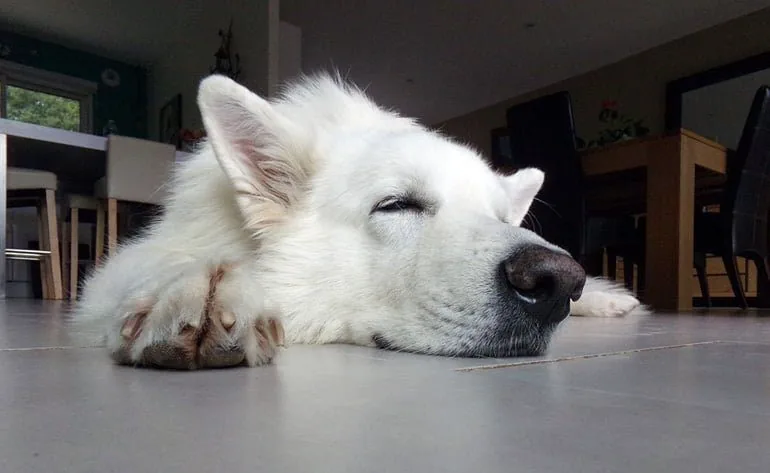
We're obviously referring to dogs with a somewhat shorter-than-normal muzzle, like the Boxer, the Pug, the Pit Bull, the Chow Chow, and the Shar Pei, among many others.
These breeds are attributed with brachycephalic syndrome, which is nothing other than what we just described — meaning these are breeds with a shorter muzzle, which makes breathing a bit more complex.
It's completely normal for breeds with this syndrome to snore — meaning if your dog is flat-faced (short-muzzled), snoring is part of the package. Some snore just a little, while others snore louder than grandpa.
This is due to narrowed nostrils and everted laryngeal saccules. Unless it comes with mucus or pauses in breathing, snoring on its own isn't a symptom that should worry us at first.
Snoring in Sick Dogs
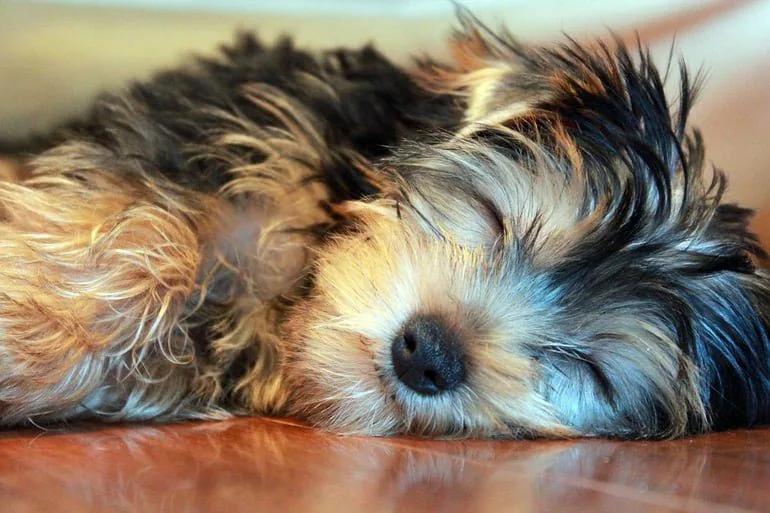
Dogs with a condition related to the respiratory system may occasionally snore due to excess mucus or airway inflammation.
If we know our dog is sick and already being treated, we shouldn't pay it special attention. That said, if our dog starts snoring (and never did before) and seems down, has trouble breathing, or has mucus, we should see a vet for a checkup.
Some conditions, like kennel cough, affect a dog's respiratory system, causing it to snore, or if it already snored, to do so louder and more intensely.
Snoring From Blocked Airflow
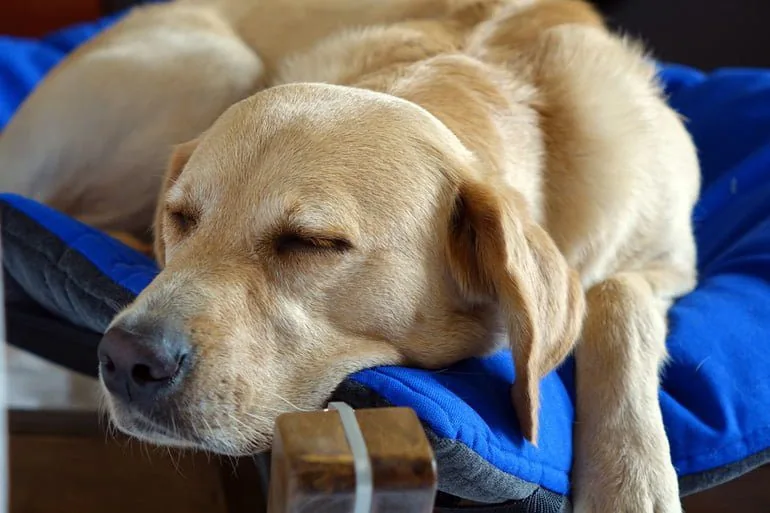
If your dog is the typical contortionist that sleeps with its head hanging off the bed, tilted to one side as if its neck were broken, it's completely normal for it to snore. The dog's own position makes this kind of noise likely.
If our dog has swallowed an object, or something is blocking airflow through its nostrils or larynx, it may also snore. That said, in this case, we should seek veterinary help.
In breeds like the Basset Hound or the Old English Sheepdog, it's common for small tumors in the airways to appear in older age, which, besides partially or fully blocking airflow, cause the dog to snore. Our vet obviously needs to examine these tumors to remove them and check whether they're benign or, on the other hand, malignant (cancer).
Here's a video with different dogs snoring — which one sounds most like yours?
IMPORTANT: This article is for informational purposes only and does not constitute veterinary, nutritional or behavioural advice. Every dog is different, and only your trusted vet can advise you on its specific needs.