 Breeds
12 Large Dog Breeds
The next step up from medium dogs is large dog breeds, which have a special charm that makes them adorable. Although there are dozens and dozens of breeds this size, these are the most popular and widespread on our planet.
We show you the twelve large breeds you should know, with their characteristics, temperament, behavior with family, and the care they need to stay healthy and happy. Which one will you like best?
About Large Breeds
It's always worth remembering that if you're thinking about adopting one of these breeds, you need a large yard or plot of land where it can run and play comfortably. Due to their size, these breeds aren't recommended for living in small apartments or places without room for long walks.
A large dog means a large expense. The amount of food to buy, vaccines, checkups, and anything related to the dog will come with costs to match its size — large. Let's look at the best-known breeds.
 Siberian Husky
The Siberian Husky
This breed of Asian origin is very athletic and energetic, possibly one of the smartest breeds in the world, which combined with its somewhat independent nature can make it tricky to train.
In a family setting it's a sociable, affectionate breed. As an adult it weighs around thirty kilos and stands about fifty-five centimeters at the withers. This breed is only recommended for people with prior dog experience.
The American Staffordshire Terrier
Also known as the Amstaff, this breed comes from crossing old English breeds. Adults weigh around thirty kilos and stand about forty-five centimeters at the withers.
Its temperament is very affectionate and playful within its family, but wary and even aggressive with other dogs. In Spain it's considered a potentially dangerous breed, so you need a PPP license to own one.
The Cane Corso
Also called the Italian Mastiff, this is an intelligent, majestic breed with an impressive presence. It's very well-balanced, respectful, and even affectionate with its family, but not with other dogs.
It's an excellent guard dog, since it's always alert and knows no fear. In ancient times it was the most commonly used breed in warfare, for its aggression and endurance. Today it's become an excellent companion dog, not recommended for people with no experience in dog training.
 German Shepherd
The German Shepherd
Also known as the German Sheepdog for its use as a herding dog in its home country, this breed stands out above the rest for its impressive intelligence and quick learning.
The German Shepherd reaches an average weight of around forty kilos as an adult, with a height at the withers of up to sixty centimeters. It's a very active breed that needs high amounts of daily exercise, recommended only for very active people with space.
The Boxer
Known worldwide as "the eternal puppy" for its tireless urge to play, even into adulthood, this breed is a role model when it comes to temperament and behavior.
Due to its high energy level, it needs a lot of daily exercise, play, and interaction with other dogs and every family member. It's very family-oriented, respectful, and loyal — one of our favorite breeds, without a doubt.
The Doberman
Unfairly labeled a dangerous dog by society, the truth is it isn't included on Spain's PPP breed list. This is a very intelligent, active breed, affectionate within its family.
It's very fond of play, loves outdoor exercise, and enjoys the company of other dogs. Weighing forty-five kilos as an adult, it's one of the most widespread large breeds in the world.
 American Pit Bull Terrier
The American Pit Bull Terrier
Considered by many the breed par excellence, the Pit Bull stands out for its high energy, learning ability, affectionate family temperament, and guard-dog skills. It's a very well-rounded breed that's also considered potentially dangerous in Spain, so you need to obtain a PPP license.
As adults, they weigh around twenty-five kilos and stand about forty centimeters at the withers. They need lots of daily exercise and aren't recommended for people with no experience.
 Chow Chow
The Chow Chow
Also called the Panda dog thanks to its impressive mane, this breed of Chinese origin stands out among most others for its distinctive blue tongue. Adults weigh around thirty kilos and stand about fifty centimeters at the withers.
Although it's a very intelligent breed, it's also quite stubborn, so training can be tricky. It's also very wary of strangers, which makes it a good guard dog.
The Belgian Malinois
Somewhat smaller than the German Shepherd, this breed stands out for being extremely intelligent and quick to learn — it's one of the best working dog breeds in the world.
It's a workaholic, so it has a huge energy level, which we need to burn off with high doses of daily exercise and work. Within its family it's affectionate and respectful, as long as it gets proper training. It's one of the most widespread large-sized breeds.
The Samoyed
This breed stands out for its beautiful white or cream coat and its well-known "smile." It's really just a facial expression that makes it look like it's smiling, but we all love it anyway.
Weighing around thirty kilos as an adult and standing fifty centimeters at the withers, it's one of the most sought-after large breeds today. Its temperament is calm and affectionate within its family, playful, and very active.
The Alaskan Malamute
Although it's a reserved, wolf-like-looking breed, with family and people it knows it'll be very playful, active, and affectionate. It's without a doubt one of the most resilient breeds on the planet, and also one of the smartest.
Weighing an average of forty kilos as an adult, it's one of the heaviest large breeds around, without being considered giant-sized.
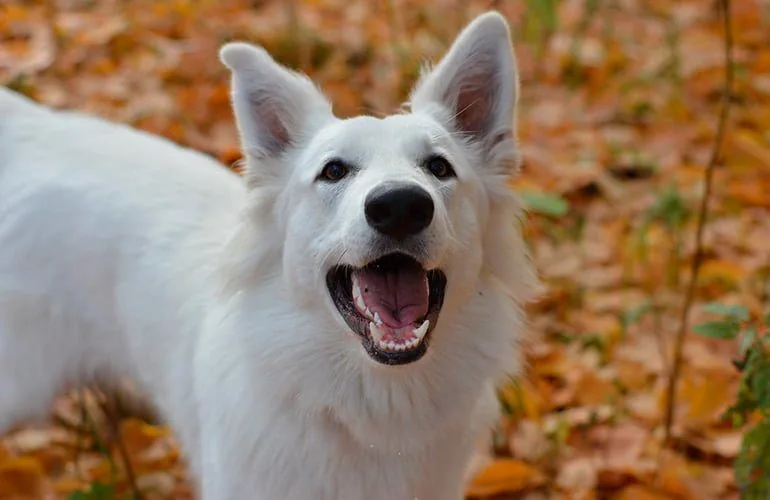 Swiss Shepherd
The Swiss Shepherd
Here's another large breed that stands out for its beautiful white or cream coat color. This breed is super sociable, intelligent, and affectionate, making it highly recommended for practically any family setting.
It's very easy to train and will always be attentive to our needs. With an average weight of around thirty-five kilos and a height at the withers of about fifty-five centimeters, this could well be your ideal breed.
Now that you know the main large-sized dog breeds, which one is your ideal breed?
IMPORTANT: This article is for informational purposes only and does not constitute veterinary, nutritional or behavioural advice. Every dog is different, and only your trusted vet can advise you on its specific needs.